
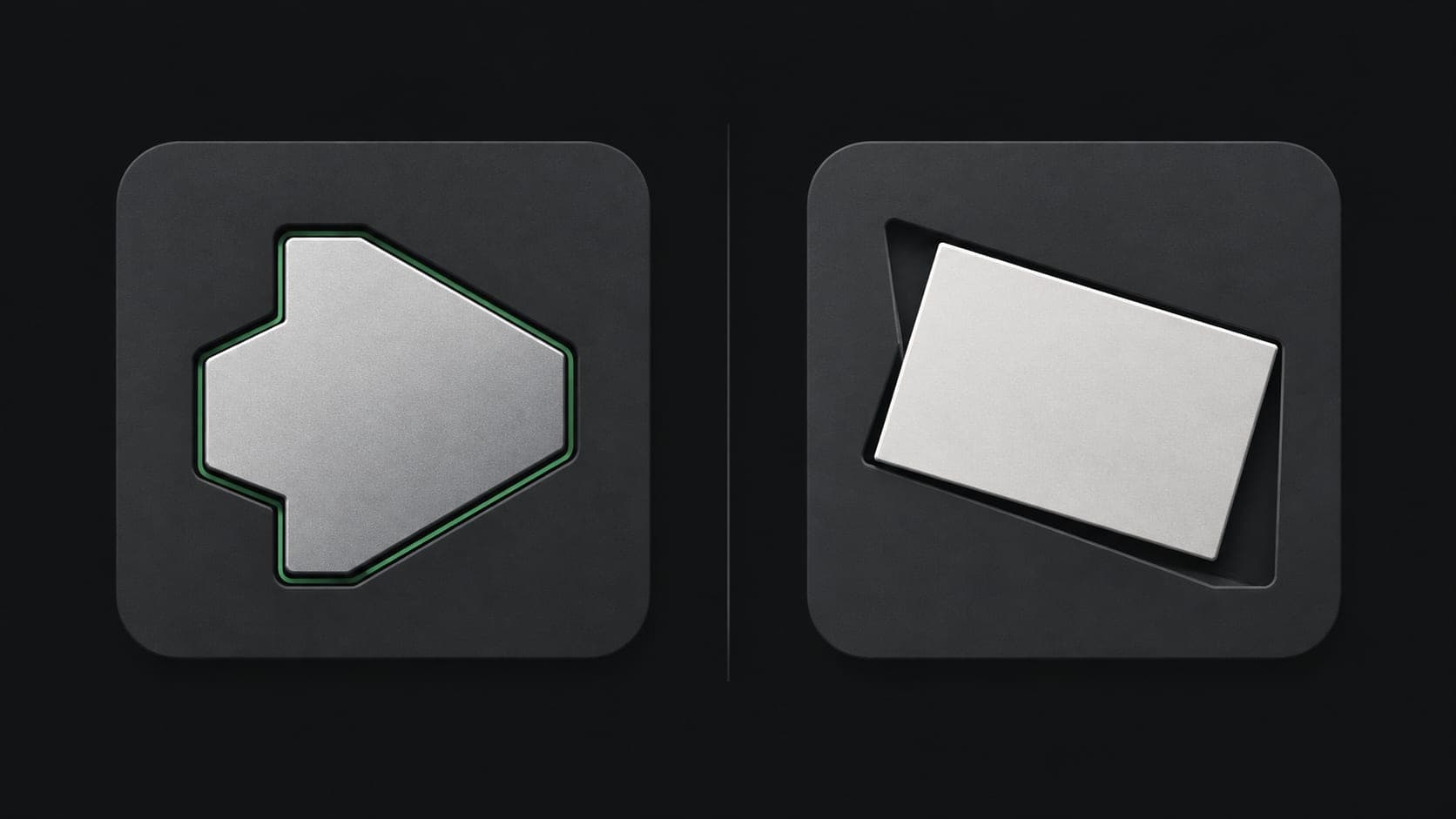
This question comes up early in almost every project conversation, usually phrased as "should we just build our own system?" The honest answer is: it depends on how well the existing options fit the way you actually work — and that's a question worth answering carefully before committing either way.
What off-the-shelf software does well
Established platforms exist for a reason. They're usually cheaper upfront, faster to set up, well-tested, and come with existing documentation and support. For common, well-understood processes — accounting, basic scheduling, generic CRM — an existing platform is very often the right call. There's no reason to build what already exists and works.
Where off-the-shelf starts to strain
The friction shows up when your process doesn't quite match the platform's assumptions. You end up with workarounds: a field repurposed to mean something it wasn't designed for, a manual step bridging two tools that don't talk to each other, a report you can't quite generate without exporting to a spreadsheet anyway. Individually, these workarounds seem minor. Together, they become a second, informal system layered awkwardly on top of the "real" one.
What custom software is actually for
Custom software makes sense when the workflow itself is the differentiator, or when no existing platform models it well — a specific way you manage multi-branch inventory, a booking flow with rules unique to your service, an internal approval process shaped by how your team is actually structured. In these cases, custom development isn't about wanting something bespoke for its own sake. It's about the cost of forcing a real process into a shape it doesn't fit.
The real cost comparison
The comparison isn't "cheap platform" versus "expensive custom build." It's the ongoing cost of workarounds, manual reconciliation, and lost time on one side, against the upfront investment and ownership responsibilities of custom software on the other. A platform that's 80% right but requires daily manual patching can end up costing more, quietly, over two years than a system built to fit from the start.
A practical way to decide
Map your actual process — not the idealized version, the one your team really follows day to day. Then check how many steps in that process require a workaround inside your current or prospective platform. If it's one or two minor items, an existing platform is probably still the right call. If workarounds are touching the core of how you operate, that's a strong signal a custom system pays for itself.
Custom doesn't mean starting from nothing
It's also worth knowing that "custom" doesn't always mean building everything from scratch. Many custom systems still use established databases, frameworks, and hosting — the customization is in the workflow logic and interface, not in reinventing infrastructure. That keeps a well-scoped custom build more affordable, and more maintainable, than it might initially sound.