Service
UI/UX Design
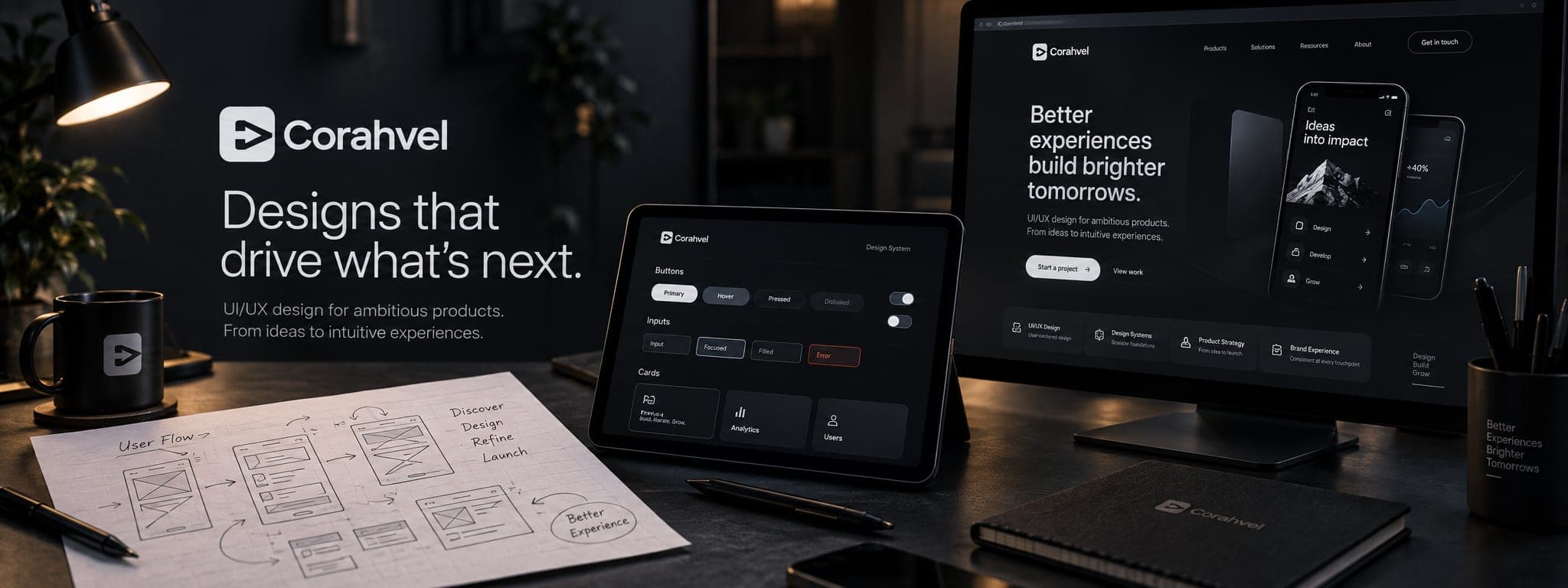
User-friendly digital experiences built on clarity, usability, and the goals of the business — not decoration.
The Problem
What This Solves
- Users get confused or drop off inside the product
- Internal dashboards are cluttered or hard to navigate
- The interface does not reflect the way people actually work
- There is no consistent design system across screens
Who It's For
Built For
- Software and SaaS products in design or redesign
- Businesses building customer or admin portals
- Teams needing a usability audit of an existing product
- Founders validating a product concept before development
What's Included
Core Features
How We Work
How We Deliver This
The same sequence on every engagement, so you always know which stage you are in and what happens next.
Start from the task, not the screen
We write down what the user is trying to finish and how they judge success. Layout decisions then have a standard to be measured against instead of personal taste.
Wireframes before visual design
Structure and flow are agreed in grey boxes first. Discussing hierarchy without colour in the way is faster and produces better arguments.
Prototype and put it in front of people
Clickable prototypes are tested with people who resemble real users. Watching someone hesitate for four seconds tells you more than any opinion in a review meeting.
Build a design system, not one-off screens
Components, spacing, type scale, and states are defined once so every future screen stays consistent without redesigning from scratch.
Hand over so developers can build it
Files are delivered with states, breakpoints, and edge cases specified — empty, loading, error — the cases that cause the most rework when left undefined.
What You Get
What You Receive
- User flows and wireframes for the agreed scope
- High-fidelity interface designs across required breakpoints
- An interactive prototype of the core journeys
- A component-based design system with documented states
- Developer handover files with specifications and assets
- A written usability findings summary where testing is included
Typical timeline
Design engagements typically run 2–6 weeks depending on screen count and how much user testing is included.
Every project is scoped individually. You receive a specific timeline in writing before any work begins.
The Outcome
Benefits
Fewer support questions caused by confusing interfaces
Faster onboarding for new users or staff
A consistent design language across the whole product
Interfaces validated before expensive development begins
Working With Us
Why Clients Stay
Commitments we make on every project — the things we can be held to, rather than claims about ourselves.
Problems caught before they cost code
A flaw found in a prototype costs an afternoon. The same flaw found after development costs a sprint. That gap is where design pays for itself.
Design that developers can actually build
We design within real technical constraints, so handover does not become a negotiation about which parts are feasible.
Scope is written down before we start
What is included is agreed up front. Changes are quoted openly rather than absorbed silently or invoiced as a surprise at the end.
Opinions get tested, not argued
Where there is disagreement, we put the prototype in front of users and let the evidence settle it.
We map the user's task first, then design the interface that gets them through it with the fewest possible steps.
See our full processFAQ
Questions About This Service
Yes. UI/UX design is available as a standalone engagement, including for teams with their own development resources.
Yes, for larger products we build a component-based design system so future screens stay consistent.
Yes, usability audits and interface redesigns are a regular part of this service.
Related Services